The science behind Soul Sanctuary
Ancient wisdom.
Modern science.
Measurable change.


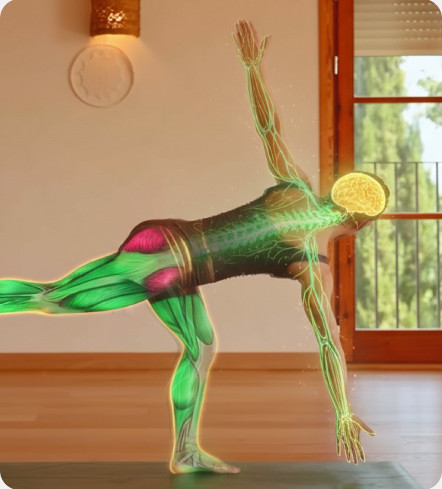
At Soul Sanctuary, we don't guess, we ground.,
our approach in modern research, human expertise, and real user outcomes.
Soul Sanctuary brings together insights from neuroscience, physiology, psychology, movement science, somatic awareness, behavior change, and longstanding mind-body traditions.
Intelligent technology personalizes each experience around how you feel, the moment you are facing, the outcome you want, the time you have available, and what has worked for you before.
After each experience, your feedback helps us understand what changed and improve future recommendations.
This is science-informed, human-guided, and designed to help you prepare, recover, refocus, and perform in the moments that matter.
Mindful Eating
Mindful Eating and Awareness of Fullness
Highlights: This systematic review and meta-analysis found that mindfulness-based interventions improved fullness awareness and reduced eating prompted by external cues and impulsive food choices. Effects on emotional eating and binge eating were not statistically significant. The findings support eating awareness while showing that benefits vary across behaviors. Kao et al. (2025 issue; published online 2024), Obesity Reviews. Original article: Effects of mindfulness-based interventions on obesogenic eating behaviors: A systematic review and meta-analysis. This review did not evaluate Soul Sanctuary.
Responding to Food Cravings With Mindfulness
Highlights: A review of 24 controlled studies involving 1,920 adults found a small reduction in craving intensity with mindfulness-based interventions. Craving frequency did not significantly change, and the certainty of evidence was rated low. The findings suggest that mindfulness may help some people relate differently to cravings, rather than prevent them entirely. Allameh et al. (2025), BMC Psychology. Original article: Effects of mindfulness-based interventions on food craving in adults: a systematic review and meta-analysis of controlled clinical trials. This review did not evaluate Soul Sanctuary.
Learning More Mindful Eating Habits: The SHINE Trial
Highlights: In a randomized trial of 194 adults with obesity, adding mindfulness training to a diet-and-exercise program increased mindful eating compared with the same program without mindfulness. Within the mindfulness group, greater increases in mindful eating were associated with reduced sweet-food consumption. This was a multicomponent program; the findings do not isolate a brief eating exercise or establish benefits for every population. Mason et al. (2016), Journal of Behavioral Medicine. Original article: Effects of a mindfulness-based intervention on mindful eating, sweets consumption, and fasting glucose levels in obese adults: data from the SHINE randomized controlled trial. This study did not evaluate Soul Sanctuary.
Mindful Eating Training May Improve Emotional Eating
Highlights: A small randomized trial found that an eight-week Mind-Eat program improved mindful eating and emotional and external eating more than usual education based on intuitive eating principles. Only 46 of 66 randomized adults were included in the main analysis, and follow-up lasted 12 weeks. Weight, stress, anxiety, and depression did not differ between groups. Van Beekum et al. (2026), International Journal of Behavioral Nutrition and Physical Activity. Original article: The mind-eat program leads to greater improvements in mindful, emotional, and external eating compared to intuitive eating-oriented education in adults with overweight or obesity: a randomized controlled trial. This study did not evaluate Soul Sanctuary.
Somatic - Touch
Stress Management - Fatigue - Lonliness
Highlights: Self-soothing touch may help ease stress and fatigue in the moment.
Self-Soothing Touch May Buffer the Body’s Stress Response
Highlights: In a randomized trial of 159 healthy young adults, self-soothing touch and receiving a hug reduced cortisol responses to a laboratory stressor compared with a control condition. Heart rate and self-reported stress did not differ between groups. The findings suggest a potential effect on physiological stress responses, rather than guaranteed feelings of calm. Dreisoerner et al. (2021), Comprehensive Psychoneuroendocrinology. Original article: Self-soothing touch and being hugged reduce cortisol responses to stress: A randomized controlled trial on stress, physical touch, and social identity. This study did not evaluate Soul Sanctuary.
Daily Self-Compassionate Touch: Promising but Practice-Dependent
Highlights: A randomized trial of 135 university students tested a brief self-compassionate touch practice against a finger-tapping control. The main analysis found no significant group effects. In a smaller analysis of participants who practiced regularly, self-compassion, stress, and mental health symptoms improved more with self-compassionate touch. These findings are preliminary and do not establish benefits for everyone. Susman et al. (2024), Behaviour Research and Therapy. Original article: Daily micropractice can augment single-session interventions: A randomized controlled trial of self-compassionate touch and examining their associations with habit formation in US college students. This study did not evaluate Soul Sanctuary.
Building a Habit of Self-Compassionate Touch
Highlights: In a preregistered randomized trial of 497 adults, adding habit-formation support to a daily self-compassionate touch practice improved practice frequency, habit strength, and self-compassion over three to six months. Mental health symptoms also improved more at six months. Both groups learned touch, so the study tests the added value of habit support rather than touch versus no practice. Susman et al. (2026), Scientific Reports. Original article: Habit-formation strategies enhance long-term outcomes of a self-compassionate touch micropractice: a randomized controlled trial. This study did not evaluate Soul Sanctuary.
Touch and Wellbeing: What a Large Research Review Found
Highlights: A systematic review covering 212 studies, including 137 in its meta-analysis, found that touch interventions benefited several physical and mental health outcomes. Adult findings included reductions in pain, anxiety, and depressive feelings. The studies involved varied forms of received touch, often massage; they do not establish the same effects for guided self-touch. Small-study bias and difficulties blinding participants limit certainty. Packheiser et al. (2024), Nature Human Behaviour. Original article: A systematic review and multivariate meta-analysis of the physical and mental health benefits of touch interventions. This review did not evaluate Soul Sanctuary.
Gentle Stroking and Pain Perception
Highlights: In a brain-imaging experiment involving 32 participants, a gentle stroking gesture from another person reduced experimentally induced pain in a low-pain condition more than a tapping gesture. The study helps explain how comforting touch may influence pain processing. It tested received touch and short-term laboratory pain, rather than self-touch or treatment of chronic pain. Original article: Social Touch Reduces Pain Perception—An fMRI Study of Cortical Mechanisms (2023). This study did not evaluate Soul Sanctuary.
Wellness Check-in Benefits
How Naming Your Feelings May Help You Manage Them
Highlights: Putting emotions into words can change how the brain responds to emotional information. This study found reduced amygdala activity when participants labeled emotions in negative images, offering a scientific foundation for naming feelings during a check-in. Lieberman et al. (2007), Psychological Science. This study did not evaluate Soul Sanctuary.
Putting Feelings Into Words May Ease Your Body’s Fear Response
Highlights: In a study involving people afraid of spiders, naming feelings during exposure led to lower physiological fear responses at follow-up. Participants did not report greater reductions in fear, suggesting that bodily responses and perceived feelings can change differently. Kircanski, Lieberman & Craske (2012), Psychological Science. This study did not evaluate Soul Sanctuary.
Noticing Thoughts Without Getting Caught Up in Them
Highlights: This review explores decentering—recognizing thoughts and feelings as passing experiences. It examines how becoming aware of thoughts, identifying with them less strongly, and responding less automatically may support mental wellbeing. Bernstein et al. (2015), Perspectives on Psychological Science. This review did not evaluate Soul Sanctuary.
Why Intention Matters in Mindfulness
Highlights: This influential theoretical paper proposes that mindfulness involves intention, attention, and attitude. It provides a framework for understanding why noticing your current experience and clarifying what matters to you may be useful parts of a wellness check-in. Shapiro, Carlson, Astin & Freedman (2006), Journal of Clinical Psychology. This is a proposed model, rather than a trial of a check-in, and did not evaluate Soul Sanctuary.
Turning an Intention Into Action
Highlights: A meta-analysis of 94 independent tests found that specific if–then plans improved goal attainment. The findings support connecting an intention with a practical next step, such as choosing when and where to complete a wellbeing practice. Gollwitzer & Sheeran (2006), Advances in Experimental Social Psychology. This research concerns action planning and did not evaluate Soul Sanctuary.
How Reflecting on Progress Helps You Move Toward Your Goals
Highlights: Across 138 randomized studies involving nearly 20,000 participants, interventions that encouraged progress monitoring improved goal attainment. This supports reflecting on whether a practice helped you move toward your intended outcome. Harkin et al. (2016), Psychological Bulletin. This research concerns progress monitoring and did not evaluate Soul Sanctuary.
Yoga
Yoga as a Therapeutic Intervention (Systematic Review)
Highlights: Improved metabolic markers, cardiovascular health, pain, and stress.
Yoga for Stress Reduction (2024 Meta-Analysis)
Highlights: Reduced perceived stress and improved emotional resilience.
Yoga for Anxiety & Depression (Harvard Review)
Highlights: Significant reduction in anxiety, depression, rumination, and stress biomarkers.
Yoga & Brain Health (Neurobiological Review)
Highlights: Increased gray matter, improved cognition and emotional regulation.
Yoga for Physical Function in Older Adults
Highlights: Enhances balance, flexibility, sleep, vitality, and strength.
Improved Back Function - Reduce Pain - Improve Sleep
Highlights: Guided virtual yoga can support back function, pain management, and sleep.
🌀 Tai Chi & Qi Gong
Qi Gong for Stress & Immune Health
Highlights: Lowers cortisol and enhances immune markers.
Qi Gong & Autonomic Nervous System Regulation
Highlights: Improves HRV and mood regulation.
Tai Chi for Balance & Mobility (Systematic Review)
Highlights: Improves proprioception, functional mobility, and fall prevention.
Tai Chi for Psychological Well-Being
Highlights: Improvements in mood, sleep, anxiety, emotional well-being.
Reduce Depression - Improve Cognition
Highlights: Preliminary evidence suggests regular Qi Gong may support mood and aspects of cognitive function in older adults.
🌬️ Breathwork
Breathwork for PTSD (Randomized Controlled Trial)
Highlights: Reduces PTSD symptoms, anxiety, and sleep issues.
Slow Breathing & Heart Rate Variability (Systematic Review)
Highlights: Boosts parasympathetic activity, HRV, and relaxation.
Resonance Frequency Breathing
Highlights: Improves vagal tone and reduces anxiety.
Controlled Breathing & Cognitive Performance
Highlights: Enhances attention, memory, emotional stability.
Improvements in positive mood
Highlights: Brief daily breathing practices can support mood and reduce physiological arousal.
🏃 Mindful Movement & Somatic Practices
Interoceptive Awareness Through Movement
Highlights: Improves self-regulation and reduces stress.
Slow, Intentional Movement & Emotional Resilience
Highlights: Supports vagal tone, emotional flexibility, and resilience.
Somatic Practices for Trauma Recovery
Highlights: Improves interoception, emotional regulation, trauma processing.
Dance/Movement Therapy (Meta-Analysis)
Highlights: Enhances mood, emotional expression, body awareness.
Improved Attention-Task Performance
Highlights: A brief mindfulness practice may support attention and reduce mental distraction.
🔊 Sound & Vibration
Binaural Beats for Anxiety (Meta-Analysis)
Highlights: Reduces state anxiety and supports calm.
Tibetan Singing Bowl Sound Meditation
Highlights: Reductions in tension, anxiety, anger, and fatigue.
Vibroacoustic Therapy & Self-Regulation
Highlights: Supports grounding and emotional regulation, especially for trauma.
Low-Frequency Sound Therapy Study
Highlights: Reduces stress-related physiological markers.
Stress Management
Highlights: Preliminary research suggests structured sound meditation may support relaxation and stress management.
🤸 Pilates
Pilates for Balance & Fall Prevention
Highlights: Improves balance, gait mechanics, and proprioception.
Pilates & Quality of Life
Highlights: Increases emotional well-being and body awareness.
Pilates for Chronic Low Back Pain (Systematic Review)
Highlights: Reduces pain, improves function and mobility.
Pilates & Core Strength
Highlights: Increased trunk stability, posture correction, and movement efficiency.
Improved Back Function - Reduced Pain - Better Mobility
Highlights: Pilates can support physical function and confidence in movement.
🧘 Meditation & Mindfulness
Meditation for Pain (Neuroimaging Study)
Highlights: Reduces pain perception through non-opioid neural pathways.
Meditation & Immune Function
Highlights: Lowers inflammation and strengthens immune signaling.
Short-Term Meditation Improves Attention
Highlights: Measurable improvements in attention after brief training.
Mindfulness-Based Stress Reduction (Meta-Analysis)
Highlights: Reduces depression, anxiety, and stress across populations.
Meditation & Brain Structure (Meta-Analysis)
Highlights: Increases cortical thickness in attention and emotional regulation networks.
Target Employee Stress
Highlights: Digital meditation can reduce perceived stress and support workplace well-being.